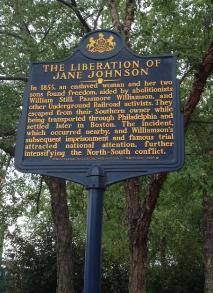
The term "Underground Railroad" generally refers to the various, mostly informal, networks of
people who helped freedom seekers escaping slavery during the early 19th century. Although there
was a fugitive slave law as early as 1793, it was the Fugitive Slave Law of 1850, and its harsh
penalties for helping freedom seekers, that gave Underground Railroad activity its clandestine
flavor, and perhaps helps to explain the scarcity of documentation. Much of what we know comes to
us from stories passed down from generation to generation and from oral tradition. There is
continuing interest in primary sources including letters, and William Still's classic
"The Underground Railroad" published in 1872, is a treasure trove of information. Research continues.
people who helped freedom seekers escaping slavery during the early 19th century. Although there
was a fugitive slave law as early as 1793, it was the Fugitive Slave Law of 1850, and its harsh
penalties for helping freedom seekers, that gave Underground Railroad activity its clandestine
flavor, and perhaps helps to explain the scarcity of documentation. Much of what we know comes to
us from stories passed down from generation to generation and from oral tradition. There is
continuing interest in primary sources including letters, and William Still's classic
"The Underground Railroad" published in 1872, is a treasure trove of information. Research continues.


I am indebted to historian Nancy Webster for much information about the Underground Railroad
including the context. People create famililiar patterns so that any change in that pattern is noticed.
Thus a church was not a good place to hide fugitives because, except for Sunday, there is little
activity and people (and change in use patterns) would be noticed. Fugitives might be hidden in a
barn or in the woods and moved by people who would be expected to be out at odd hours, such
as a farmer making deliveries of milk, or a midwife. Stories of codes and disguises are common, and
songs like "Follow the Drinking Gourd", "Wade in the Water", and "Children How Shall I Send
Thee" are believed to have UGRR connections.
.
including the context. People create famililiar patterns so that any change in that pattern is noticed.
Thus a church was not a good place to hide fugitives because, except for Sunday, there is little
activity and people (and change in use patterns) would be noticed. Fugitives might be hidden in a
barn or in the woods and moved by people who would be expected to be out at odd hours, such
as a farmer making deliveries of milk, or a midwife. Stories of codes and disguises are common, and
songs like "Follow the Drinking Gourd", "Wade in the Water", and "Children How Shall I Send
Thee" are believed to have UGRR connections.
.
Darby and the Underground Railroad
Anti-slavery sentiment in Darby goes back at least as far at 1715 when John
Blunston, Caleb Pusey, Nicholas Fairlamb and John Wright laid a concern
before the Quarterly Meeting regarding the practice of "importing, buying or
selling negroe slaves". (text)
Blunston, Caleb Pusey, Nicholas Fairlamb and John Wright laid a concern
before the Quarterly Meeting regarding the practice of "importing, buying or
selling negroe slaves". (text)
During a recent talk, Nancy Webster said that the Underground Railroad was similar
in some ways to the recent sanctuary movement, where someone would be told to
collect an individual at a certain place, and then bring them to another place, where
someone else would take the person on from there and that was all they knew. The
compartmentalization helped to ensure that no-one could betray the network. Another
aspect of this compartmentalization was Passmore Williamson's honest answer
that he did not know where Jane Johnson was after her liberation (because he
deliberately did not ask where she was being taken )
in some ways to the recent sanctuary movement, where someone would be told to
collect an individual at a certain place, and then bring them to another place, where
someone else would take the person on from there and that was all they knew. The
compartmentalization helped to ensure that no-one could betray the network. Another
aspect of this compartmentalization was Passmore Williamson's honest answer
that he did not know where Jane Johnson was after her liberation (because he
deliberately did not ask where she was being taken )
The Darby area's involvement with helping freedom-seekers may go back as far as 1787
and the end of George Washington's Presidency when Hercules, his cook, disappeared
"somewhere between Philadelphia and Chester, on the final trip back to
Mt. Vernon" (Lawlor). He was never recaptured and it is possible he had local help. John
Jackson of Darby (now Sharon Hill) is known to have aided fugitives and research is continuing.
and the end of George Washington's Presidency when Hercules, his cook, disappeared
"somewhere between Philadelphia and Chester, on the final trip back to
Mt. Vernon" (Lawlor). He was never recaptured and it is possible he had local help. John
Jackson of Darby (now Sharon Hill) is known to have aided fugitives and research is continuing.
Charles Lloyd, proprietor of the Blue Bell Inn on Cobbs Creek
who was said to have taken in an escaped slave who appeared in
Darby, nursed him back to health and then paid for his passage
out of the country
who was said to have taken in an escaped slave who appeared in
Darby, nursed him back to health and then paid for his passage
out of the country
Thomas Garrett of Wilmington Delaware, who along with his
brother Edward of Upper Darby, helped some 2,700 people to
freedom. Arrested because of his activity, and bankrupted by the
Court he nevertheless said "Thou has left me without a dollar...
I say to thee and to all in this court room, that if anyone knows a
fugitive that wants shelter, send hm to Thomas Garrett and he
will befriend him."
brother Edward of Upper Darby, helped some 2,700 people to
freedom. Arrested because of his activity, and bankrupted by the
Court he nevertheless said "Thou has left me without a dollar...
I say to thee and to all in this court room, that if anyone knows a
fugitive that wants shelter, send hm to Thomas Garrett and he
will befriend him."
William Still, author of the
classic book The
Underground Railroad,
worked with Garrett and
others as part of the
Philadelphia Vigilence
Committee. He is buried in
Eden Cemetery near Darby
classic book The
Underground Railroad,
worked with Garrett and
others as part of the
Philadelphia Vigilence
Committee. He is buried in
Eden Cemetery near Darby
The Fugitive Slave Law of 1850 made it a crime to harbor, rescue or conceal a fugitive and provided
"in no trial or hearing under this act shall the testimony of such alleged fugitive be admitted in
evidence" (R.C. Smedley, History of the Underground Railroad, Pg, 384 (2005 Edition).
"in no trial or hearing under this act shall the testimony of such alleged fugitive be admitted in
evidence" (R.C. Smedley, History of the Underground Railroad, Pg, 384 (2005 Edition).
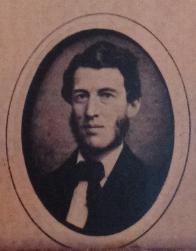
Passmore Williamson owned land in Darby from
1878-1885, served on the Vigilant Committee with Still and
Garrett , and with William Still, was instrumental in the
liberation of Jane Johnson
1878-1885, served on the Vigilant Committee with Still and
Garrett , and with William Still, was instrumental in the
liberation of Jane Johnson